The Clicquot House: Veuve Clicquot History from 1772
Hours, prices and access verified by the Veuve Clicquot Tours team — last checked 2026-09-24.
Veuve Clicquot is named for a widow who ran a champagne house at a time when
women were kept out of business. Her firsts are still what the cellar tour shows you. If a
veuve clicquot france tour is on your list, this is the story you will hear
underground, from the house's own history.
Barbe-Nicole Ponsardin, widowed in 1805
Barbe-Nicole Ponsardin was the daughter of a textile manufacturer in Reims. She married
François Clicquot, whose father Philippe had founded the family's wine business in 1772.
When François died in 1805, the house says, it took her only a few weeks to decide.
She took the company over herself. The house calls her one of the first businesswomen of
modern times, and "veuve" is simply French for widow. Her peers came to call her
"la grande dame of Champagne", and the house still uses the name.
What she built rests on three firsts the house claims for her: the first recorded
vintage champagne, the riddling table and the first blended rosé. You meet all three in the
cellars.
A timeline, 1772 to 2022
The dates below are the house's own, from its history page. They are the milestones a
house guide usually walks you through.
1772Philippe Clicquot founds the house, aiming from the start to cross borders.
1805His son François dies. Within weeks the widow, Barbe-Nicole, takes over.
1810The first recorded vintage champagne in the region.
1811An exceptional harvest, credited to a comet: the Comet vintage.
181410,550 bottles of the 1811 sail for Saint Petersburg.
1816Madame Clicquot devises the first riddling table.
1818The first blended rosé, with red wine from Bouzy.
1877The Yellow Label trademark is registered on 12 February.
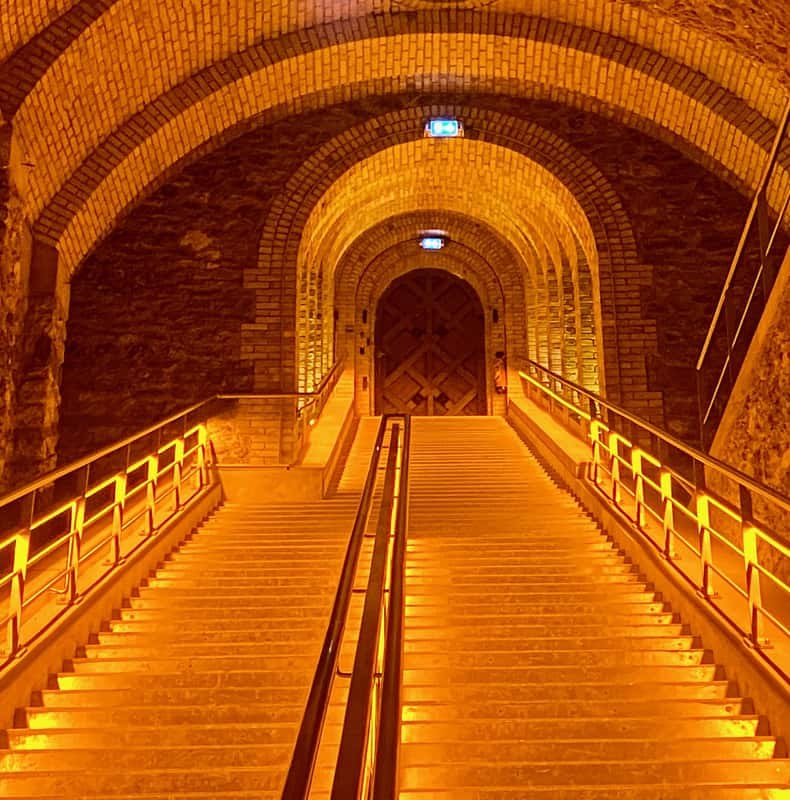
1909The house settles into 482 crayères on the edge of Reims.
1972For its 200th year: La Grande Dame, and a prize for women in business.
1986Veuve Clicquot joins Louis Vuitton; LVMH is formed the following year.
2004Veuve Clicquot Rosé launches in Japan; the rest of the world waits until 2006.
201047 of its bottles are found in a Baltic shipwreck off the Åland Islands.
2015UNESCO lists the Saint-Nicaise hill and its crayères on 5 July.
2022The 250th year, marked by the house's first travelling exhibition.
See the chalk where this happened
The house's cellar tours start at EUR 36, and the day tours put the ticket in the fare with a second producer and the drive.
In 1810 Madame Clicquot made the first recorded vintage champagne in the region: a wine
from a single year's harvest. The next year gave her the one she became famous for. The
1811 harvest was so good that people credited the comet seen over the region, and the wine
became the Comet vintage.
The house still makes a vintage only in good years. Its tasting committee decides, and a
vintage then rests at least five years in the chalk.
The riddling table, 1816
Early champagne was cloudy with dead yeast. In 1816 Madame Clicquot devised the first
riddling table to clear it. Bottles were tipped neck down, a little further each day, and
turned by hand, so the sediment slid down onto the cork.
Every other house took up the method, and the rack you see in the cellars today descends
from it. The house still turns La Grande Dame and its large formats by hand.
The first blended rosé, 1818
Madame Clicquot did not invent rosé champagne, and the house does not claim she did. Rosé
already existed, coloured with a preparation made from elderberries. What she did in 1818 was
blend red wine from her Bouzy vineyards into her champagne. That was the first rosé
d'assemblage, the blended rosé.
The house's one-hour rosé cellar tour, at EUR 60, is built around the method. It is the
visit to book if rosé is what you drink at home.
The Yellow Label, 1877
A yellow label was an odd colour for a bottle at the time. The house registered its
"V. Clicquot P. Werlé" Yellow Label trademark on 12 February 1877, and customers soon asked
for the bottle by its colour.
Today the Brut Yellow Label is the house's signature wine. It is blended from about fifty
crus, with 25 to 50% reserve wine, and rests at least 30 months. The cheapest cellar tour,
at EUR 36, ends with a glass of it.
La Grande Dame, 1972
For its 200th anniversary in 1972, the house launched La Grande Dame, a prestige vintage
cuvée named after Madame Clicquot's nickname. It rests at least seven years in the chalk.
The same year the house created a business award for women, now called Bold by Veuve
Clicquot.
The house's longest cellar tour, four hours at EUR 260, is built around this wine. If you
want the full story in one sitting, that is the visit to book.
Saint Petersburg and the Baltic bottles
Two episodes explain names you will meet on the day.
Saint Petersburg, 1814: Madame Clicquot shipped 10,550 bottles of the
1811 to Saint Petersburg, to be first in when the blockade on French goods lifted. The house
says Pushkin, Chekhov and Gogol later praised her wine. The visit centre you walk into is
named Saint-Pétersbourg after that voyage.
The Baltic, 2010: in July 2010 divers found 47 bottles of Veuve Clicquot
in a shipwreck off Finland's Åland Islands. After almost two centuries under the sea, the
house says, the wine was well preserved.
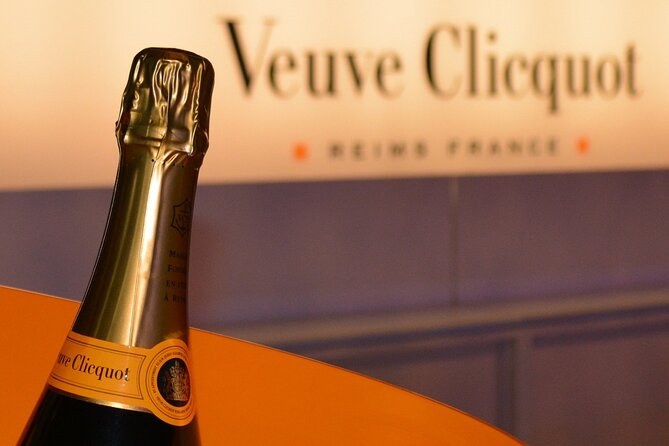
The neck of a Veuve Clicquot bottle before the house's sign, Reims France
The house today
The house has had only 11 cellar masters in its history. The current one is Didier
Mariotti, who leads the tasting committee that builds each year's blends. Its motto is
Madame Clicquot's own: "Only one quality, the finest."
Ownership: part of Louis Vuitton from 1986, and of LVMH since it
formed the following year.
Cellars: 482 crayères in Reims since 1909, UNESCO-listed since 2015.
Café: the first permanent Café Clicquot anywhere opened at the visit
centre in March 2023.
250 years: the house marked 2022 with its first travelling
exhibition.
You can visit the house on your own, from EUR 36, or with a tour that adds the drive and a
second producer. Compare the ways to go on the visitor guide.
Questions about the house and its history
Who was Madame Clicquot?
Barbe-Nicole Ponsardin, the daughter of a Reims textile manufacturer, married into the Clicquot family. Widowed in 1805, she took over the house within weeks and ran it as one of the first businesswomen of modern times.
What does veuve mean?
Veuve is French for widow. The house's name means the widow Clicquot, after the woman who ran it from 1805.
Did Madame Clicquot invent rosé champagne?
No, rosé champagne already existed, coloured with an elderberry preparation. What the house credits her with is the first blended rosé, made in 1818 by adding red wine from Bouzy.
Who owns Veuve Clicquot today?
The house joined Louis Vuitton in 1986, and LVMH was formed the following year. It belongs to that group today.
What is La Grande Dame?
It is the house's prestige vintage cuvée, launched in 1972 for its 200th anniversary. It ages at least seven years and is still riddled by hand.
A chauffeur collects you in Paris at 7:30 am for Moët & Chandon and this house, each at the tasting level you pick, with Hautvillers and the cathedral between. Back at about 8 pm.
Your own guide from a Reims hotel at 9 am: the house's cellars, the Avenue de Champagne, Hautvillers, lunch and a second producer, nine tastings in all. Non-refundable once booked.
Every date and figure here comes from the house's own history and vine-to-wine
pages, and Reims Tourisme's page on the house confirms the early dates. The UNESCO date
comes from UNESCO. The house's page gives two different figures for Madame Clicquot's age in
1805, so we print neither.