Inside the Veuve Clicquot Cellars, Gallery by Gallery
The short answer. The house keeps its wine in 482 crayères, old chalk quarries on the edge of Reims that it moved into in 1909. They sit on the Saint-Nicaise hill, listed by UNESCO in 2015, and stay at 10 to 12 °C all year. Every cellar tour walks you through the galleries, past the riddling racks, and ends at a tasting.
What you walk through, in order
A cellar tour at the house has the same bones whichever one you book. You check in at the visit centre, walk down into the chalk, follow the galleries where the bottles age, and come back up to taste. The longer tours add more wines and more time. This is the order you can expect, and what to look for at each stage.
| Stage | Where you are | What to look for |
|---|---|---|
| Check-in | The Visit Center Saint-Pétersbourg | The boutique and the café |
| The descent | Stairs into the chalk | The steps marked with vintage years |
| The crayères | Pits cut from the chalk | Their height and the cold |
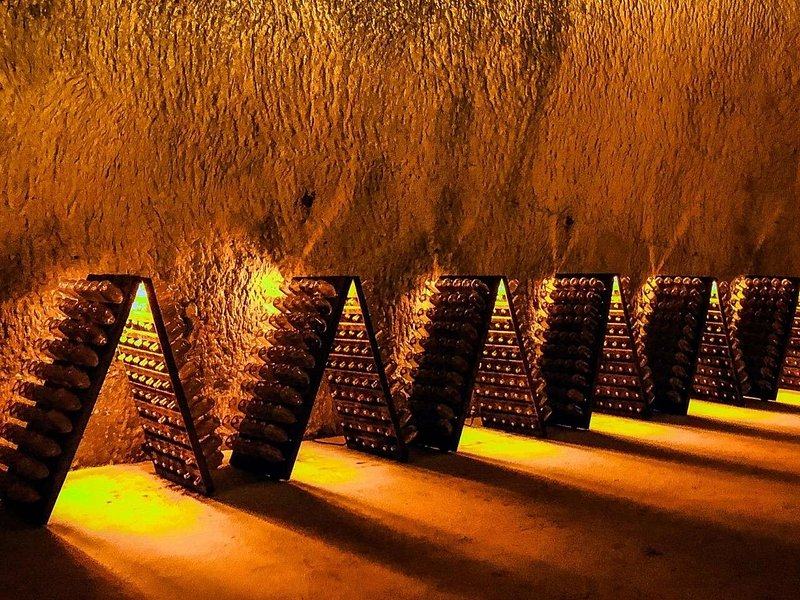
| The galleries | Long tunnels of stacked bottles | Ageing bottles lying on their sides |
| Riddling | Racks of bottles, necks down | How the sediment is moved |
| The tasting | A tasting room above ground | The wines your tour includes |
The visit centre: Saint-Pétersbourg
Every visit starts at the Visit Center Saint-Pétersbourg, 1 rue Albert Thomas. The name recalls 1814, when Madame Clicquot shipped 10,550 bottles of her 1811 vintage to Saint Petersburg. Arrive ten minutes before your slot. Reception is where you ask to take a stroller or wheelchair down with you, since there is no storage for them.
The boutique sits here, and so does Café Clicquot, open since March 2023. You do not need a cellar ticket to eat there. How you reach rue Albert Thomas from either station is on how to get there.
The crayères: chalk pits turned into cellars
The house settled into its 482 crayères in 1909. They are old chalk quarries, cut deep into the hill and later put to work as cellars. Across Champagne the Comité Champagne counts 370 crayères, and 25 km of galleries run beneath the Saint-Nicaise hill in Reims alone. In 2015 UNESCO listed the hill, the house's crayères included, as part of the Champagne Hillsides, Houses and Cellars.
What you notice first is the cold. The chalk holds the wine at a steady 10 to 12 °C, away from light and vibration, in every season. Bring a jumper even in August. The rest of the story of the chalk is on the cellars page.
The galleries where the wine ages
The galleries are where the time goes. The house sets its own minimums: 30 months in the cellars for its non-vintage wines, five years for a vintage, and seven for La Grande Dame. The Brut Yellow Label is a blend of about fifty different crus. Between a quarter and a half of it is reserve wine held back from earlier years.
To make that blend, the house tastes more than 1,000 still wines a year, and it keeps 400 reserve wines from 17 different years. You will not see a tasting panel on a visit. You will see the bottles those decisions fill, stacked in the dark.
Riddling: the table Madame Clicquot devised
A second fermentation in the bottle leaves a deposit of spent yeast behind. It has to be coaxed into the neck before it can be removed. In 1816 the house built the first riddling table, a board with angled holes that held the bottles neck down. Turned a little each day, the bottles let the deposit slide into the neck. That idea became the riddling rack you walk past in the galleries.
The steps that follow are disgorgement, which removes the deposit, then the dosage, a small addition that sets the style. The dates of each of the house's firsts, riddling included, are on the Clicquot house page.
From the press to the cork: the steps the guide names
The house sets out its own method in a fixed order, and the guides follow it underground. Knowing the words helps you keep up in the galleries:
- Pressing. The grapes are pressed after the harvest, and the juice goes to the vats.
- Fermentation. The juice becomes still wine, one lot for each vineyard.
- Tasting. The house tastes more than 1,000 still wines each year.
- Blending. The lots and the reserve wines are married into each cuvée.
- Riddling. After the second fermentation in the bottle, the deposit is moved to the neck.
- Disgorgement. The deposit is removed.
- Dosage. A small addition sets the final style before the cork goes in.
You see the second half of that list on a cellar tour: bottles resting, racks, and the finished wine in your glass. The vineyards where it starts are on the vineyards page.
What each cellar tour adds
Every one of them walks you through the chalk. What changes is the length, the wines and the setting of the tasting. Read the names as a guide to the pour:
- Brut Yellow Label, the birth of a style (1 hour, €36): the house's signature, and the right first visit.
- The art of blended rosé champagne (1 hour, €60): the rosé the house first made in 1818 by adding red wine from Bouzy.
- One Quality, The Finest (1 hour 30, €80): named after the house's motto.
- The art of aging (2 hours, €160): older vintages, for the curious palate.
- La Grande Dame, the Maison's showcase of excellence (4 hours, €260): the house's prestige cuvée, launched in 1972.
The longer ones can be booked for your party alone. The house's full calendar and contact details are on the visitor guide.
Practical notes for underground
- Dress for 10 to 12 °C. A light jacket in summer, a coat in winter.
- Wear flat shoes. You walk down into the chalk and back up again.
- Mention reduced mobility when you book. The house asks for it in advance.
- Leave pets at home. The visit centre admits no animals.
If you are torn between these cellars and the ones in Épernay, the comparison with Moët & Chandon sets the two visits side by side. For a day that includes the house and the vineyards, the shared day from Reims with growers and lunch puts the cellars first.
Tours with a choice of cellar tour at the house
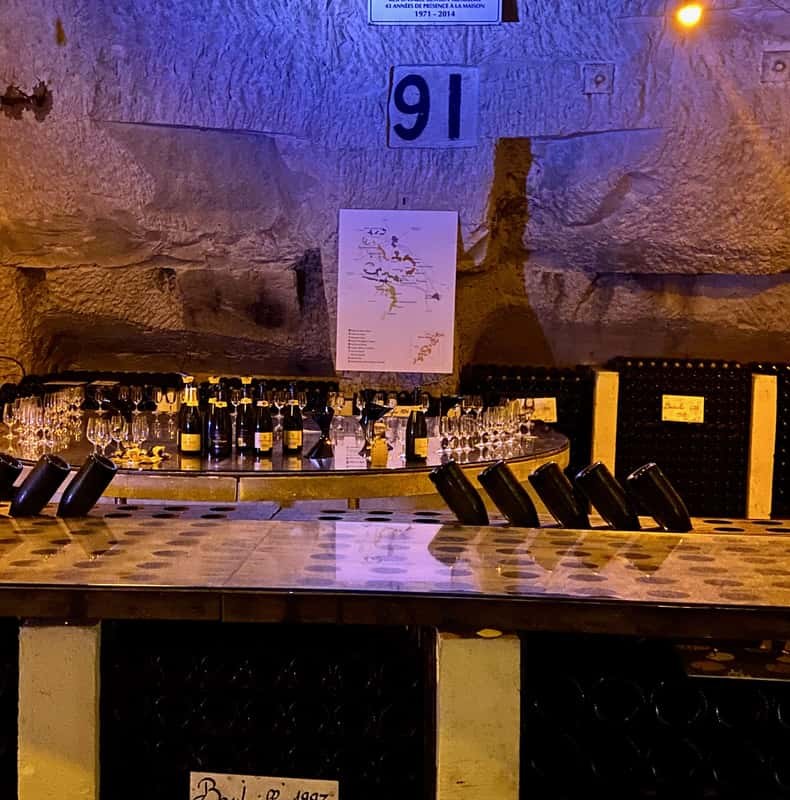
Private Veuve Clicquot Champagne Half-day Trip from Paris
Collected at 7:30 am in Paris: you pick your cellar tour at the house, up to the magnum and La Grande Dame tasting, and you are back by about 4 pm.
From $563 per person
Check Availability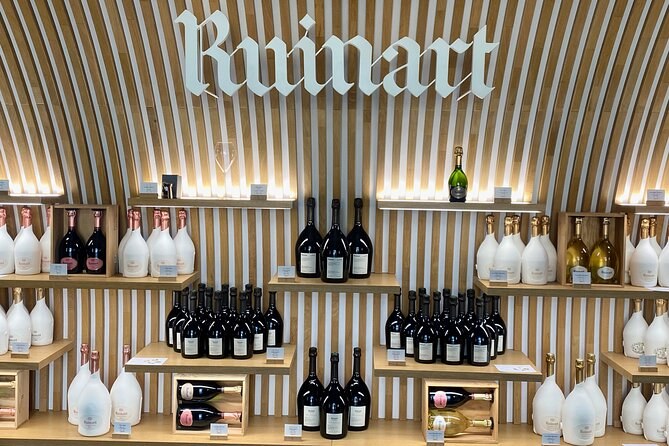
GRAND VINTAGE Ruinart Veuve Clicquot Private Champagne from Paris
Two houses whose cellars are chalk pits in Reims: your chauffeur takes you from Paris to both cellar tours, the cathedral and free time in the city.
From $793 per person
Check AvailabilityNext: Plan the trip itself with the full guide to visiting. Every fare sits side by side on Veuve Clicquot Tours.